
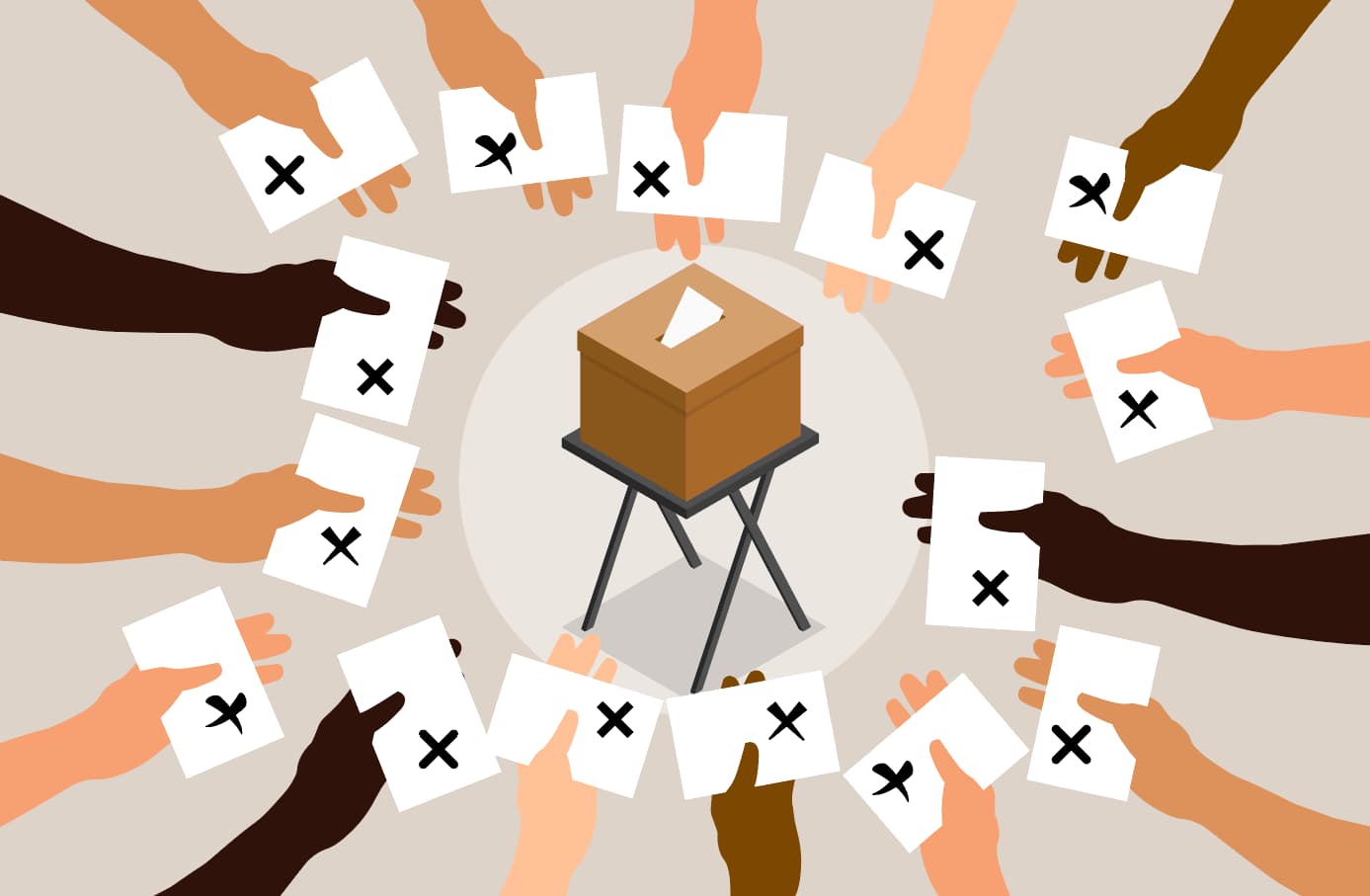
Presidential and Parliamentary Elections
At a glance
- Next date
- Time left
- 1,091 days
- Long weekend
- No
Date
This holiday is movable and its date is set by law to take place at regular intervals. For 2025, the Presidential and Parliamentary Elections are scheduled for Sunday, November 16, 2025.
Historical Background
General elections, which include presidential and parliamentary elections (deputies and senators), are the cornerstone of the Chilean democratic system. They are the fundamental process through which citizens elect their representatives and the head of state, defining the political direction of the country for the coming terms.
The right to vote and the holding of periodic elections are essential elements of the Chilean republic since its independence. Throughout history, the electoral system has evolved, going through different laws and reforms to expand suffrage (including women, illiterate people, etc.), establish secret voting, automatic registration, and, more recently, voluntary voting. Election day has traditionally been a day of great civic importance and, therefore, has been enshrined as a holiday to facilitate citizen participation.
Enactment as a Holiday
The legal holiday status for general election days is established in Ley N° 18.700, the Constitutional Organic Law on Popular Votes and Tallies, in its Article 169. This law, enacted in 1988 and which has undergone various modifications, declares the day on which popular elections are held a legal holiday, including presidential and parliamentary elections. The purpose is clear: to facilitate all citizens' exercise of their right to vote without labor impediments.
The Sunday of the Presidential and Parliamentary Elections is a day of very high civic participation throughout Chile. Millions of citizens go to the designated voting locations by the Electoral Service (SERVEL) to cast their votes. In these elections, the following are simultaneously elected:
• President of the Republic: For a four-year term. If no candidate obtains an absolute majority (more than 50% of the validly cast votes), a runoff (second round) is held between the top two vote-getters, which is also a holiday.
• Senators: For an eight-year term. Half the Senate is renewed every four years.
• Deputies: For a four-year term. The entire Chamber of Deputies is renewed every four years.
It is a day when the country stops to decide its political future. The media extensively cover the day, and the results are followed with great anticipation.
Important Facts and Curiosities
• Non-Waivable Holiday: The day of the Presidential and Parliamentary Elections is a non-waivable holiday for retail workers. This means that commercial establishments (supermarkets, department stores, shopping centers, etc.) must remain closed, with very few exceptions (such as casinos, restaurants, cinemas, live shows, clubs, airports, and on-duty pharmacies, among others).
• Voluntary Voting: In Chile, voting is voluntary, meaning citizens' participation depends on their own decision to go to the polls.
• Free Public Transportation: It is common for the State to decree free or reduced-fare public transportation in various cities and areas of the country to facilitate voter transportation to their polling places.
• Dry Law: During this holiday, the Dry Law is in effect, prohibiting the sale and consumption of alcoholic beverages during the hours established by electoral law (generally from 5:00 AM on election day until two hours after the polls close).
• Role of Poll Workers: Thousands of citizens are designated as poll workers, assuming the important task of organizing and supervising the voting process at each polling station.
Presidential and Parliamentary Elections dates
| Year | Date |
|---|---|
| 2021 | |
| 2025 | |
| 2029 | (preliminary)Upcoming |
Legal sources
Laws that establish this holiday, on LeyChile (Library of the National Congress of Chile):
Last checked: November 15, 2026.


